
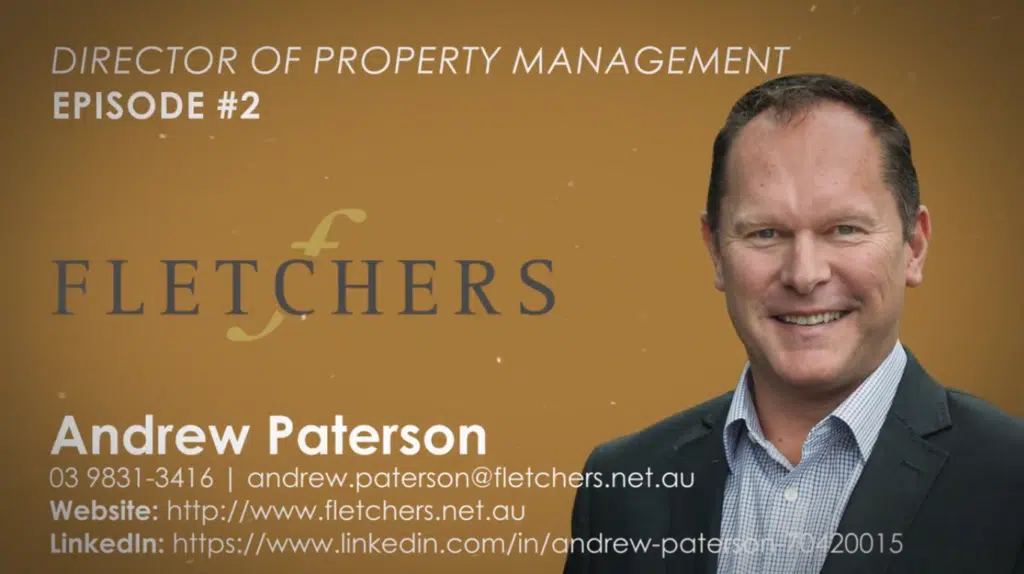
Youtube: Realestate Resource Group | Retaining Staff & Maintaining Company Culture | Ep #2 – Andrew Patterson Real Estate Success Principles – Episode 02
Navigating the Changing Landscape of Property Management in Australia
The Real Estate industry has undergone significant transformations in recent years, particularly in the realm of Property Management. With new legislative changes, evolving workforce expectations, and shifts in operational models, Professionals must adapt to remain successful.
We recently had the privilege of speaking with Andrew Paterson – Property Management Director at Fletches, to gain insights into the industry’s challenges and opportunities. Having begun his career in 1988, Andrew has spent over three decades shaping the Property Management sector, working with some of Melbourne’s leading Agencies. His wealth of experience provides a unique perspective on how the industry has changed and where it is heading.
Property Management: A Journey Through Change
Andrew’s journey in Property Management began at Drake & Company in Mitcham, a family-run business known for its strong commitment to both Residential and Commercial Property Management. His early career was marked by hands-on experience in all facets of Property Management, from Leasing and Maintenance Coordination to Tenant Relations and Dispute Resolution.
He later transitioned to Philip Webb, one of Melbourne’s most well-regarded Real Estate firms, where he played a key role in expanding the company’s Property Portfolio from 400 to 1,600 properties. This experience allowed him to witness firsthand the rapid growth of the Rental Market and the increasing complexity of managing larger portfolios.
Currently, at Fletchers, Andrew has been instrumental in the company’s Property Management expansion, growing the division from just 80 properties to an impressive 2,100 across multiple councils in Melbourne’s eastern suburbs. This substantial growth reflects not only the demand for Property Management services but also the increasing sophistication required to manage large-scale portfolios effectively.
His longevity in the industry stands in stark contrast to today’s staffing trends. Studies indicate the average tenure of Property Managers now ranges from just 9 to 12 months. This high turnover rate has created new challenges in recruitment and retention, requiring businesses to rethink their approach to talent acquisition, training, and workplace culture.
Legislative Challenges and Opportunities
One of the most significant industry changes in recent years has been the introduction of extensive legislative reforms. Andrew highlighted that prior to the latest updates, the last major legislative overhaul occurred in 1992. Even then, the changes were relatively minor compared to the sweeping reforms introduced recently.
The latest regulatory adjustments include over 130 changes, significantly altering the compliance landscape for Property Managers. These reforms have increased the administrative burden, requiring agencies to implement new processes, conduct additional inspections, and ensure strict compliance with tenancy laws. According to Andrew, these changes have effectively increased the workload of Property Management departments by approximately 30–40%.
Rather than viewing these challenges as obstacles, Andrew sees them as opportunities for growth. Agencies that proactively adapt to these changes, implement proper training, and leverage technology can position themselves ahead of competitors. At Fletchers, early planning and the adoption of a cloud-based Property Management system have been critical in navigating these regulatory shifts. This strategic approach has allowed them to remain compliant while maintaining efficiency and high service standards.
Building a Sustainable Workforce
One of the key factors in overcoming industry challenges is staff retention. The high turnover rate among Property Managers has been a growing concern, as it disrupts service continuity and increases recruitment costs. Recognising this issue, Fletchers has taken a proactive approach to building a sustainable workforce.
The company has restructured its Property Management department to create clear career progression pathways. Instead of a flat structure, employees now have opportunities to advance within the organisation. Andrew attributes much of the company’s success in retaining key personnel to this strategy, with four senior team members having tenures ranging from 10 to 17 years.
Additionally, the traditional portfolio-based management model has evolved into a task-based system. This shift allows new employees to enter the industry at different levels, gradually progressing from Inspection Consultants to Junior Portfolio Managers and beyond. By diversifying roles and reducing burnout, Fletchers has created a more sustainable and attractive career path for Property Managers.
The Impact of Remote Work
The COVID-19 pandemic accelerated the adoption of remote work, significantly impacting the Real Estate sector. While working from home has provided flexibility and improved work-life balance for many professionals, it has also introduced challenges related to collaboration and team cohesion.
Andrew stresses the importance of maintaining in-office interaction, as Property Management is a highly service-oriented industry that benefits from face-to-face engagement. While remote work offers advantages, including greater flexibility for employees, it also necessitates structured communication and regular check-ins to ensure efficiency.
Fletchers has implemented a hybrid work model that allows employees to work remotely while also ensuring they spend sufficient time in the office. This balance helps maintain company culture, facilitates knowledge sharing, and fosters team cohesion. Regular client surveys and Key Performance Indicators (KPIs) have also helped gauge the effectiveness of this model, revealing that employees have remained diligent and engaged while working remotely.
Looking to the Future
As the Property Management landscape continues to evolve, education and licensing requirements remain a concern. The recent shift from a four-unit qualification to an 18-unit requirement has placed additional pressure on recruitment efforts. While the goal of these changes is to enhance industry professionalism, Andrew believes the new requirements need urgent review to prevent long-term negative impacts on the industry’s talent pool.
The increased difficulty of obtaining qualifications has made it harder for new entrants to join the industry, exacerbating existing staffing shortages. To counteract this, agencies must focus on structured career development, mentorship programmes, and on-the-job training to attract and retain talent.
Despite these hurdles, agencies that focus on strategic planning and adaptability will thrive. The key lies in creating an environment where Property Managers feel valued, supported, and empowered to grow within their roles.
Final Thoughts
The Property Management industry in Australia is at a crossroads. Increased regulatory requirements and staffing challenges pose significant hurdles, but they also present opportunities for growth and innovation. By embracing technology, refining operational models, and prioritising staff development, agencies can position themselves for long-term success.
For professionals navigating these changes, networking and knowledge-sharing within the industry remain invaluable. As Andrew noted, the most successful Property Managers are those who continuously learn, adapt, and implement best practices. By fostering a culture of collaboration, the industry as a whole can work towards a stronger and more sustainable future.
At Rent Roll Maximiser, we provide tailored consulting services to help Real Estate Agencies grow and optimise their rent rolls. Whether you are looking to expand your rent roll, streamline operations, or enhance team culture, our expertise can guide you toward long-term success.
A 15-minute conversation today could significantly impact your Agency’s future profitability. Contact Us to discuss how we can support your business growth.
For more insights on retaining Staff, improving operational efficiencies, and growing your Real Estate Business, stay connected with Rent Roll Maximiser and industry experts like Andrew Paterson from Fletchers.
— Michael Furlong, Rent Roll Maximiser
Rent Roll Growth Consultant | Property Management Trainer & Coach | Conference Speaker | Podcast Host | Easy to follow Trello Online Systems & Procedures Manuals | Real Estate Agency “Systems” Specialist